The Ministry of Education, Research & Technology of Indonesia
The Ministry of Education, Research & Technology of Indonesia - Admin Facing
 Product Design
Client
The Ministry of Education, Research & Technology of Indonesia
Industry
Government
Website
Visit site
Reduced verification time by 85%—transforming administrative workflows across Indonesia’s higher education system
In partnership with Indonesia’s higher education ministry, DotDesign supported the transformation of administrative processes for thousands of universities and institutions nationwide. Focused on document verification—a historically manual, error-prone workflow—we helped design a digital solution that streamlined validation, reduced processing time by 85%, and laid the foundation for a scalable, transparent academic record system. Through human-centered design and deep policy alignment, this project became a blueprint for digital governance in public education.
1. Why This Matters
University administrators handle mission-critical tasks that support students, lecturers, and overall campus operations. Inefficiencies in manual paperwork, unclear approval processes, and scattered communication channels can result in delays, frustrated stakeholders, and wasted resources. By digitizing these workflows, our multi-disciplinary team aimed to empower administrators to do more with less—and do it better.
2. Context & Challenge
Understanding SR (Surat Rekomendasi) & SPTJM (Surat Pernyataan Tanggung Jawab Mutlak)
- SR (Surat Rekomendasi): Official recommendation letters often required to validate a student’s or lecturer’s status for program participation, funding, or other institutional requests.
- SPTJM: A legally binding statement of responsibility, frequently used to confirm the authenticity or accuracy of data and documentation.
Together, these documents ensure accountability and governance within higher education. However, in many campuses, the processes behind them were:
- Heavily Paper-Based: Stacks of paper forms circulated through various departments, introducing delays and risk of document loss.
- Lacking Real-Time Tracking: Administrators had limited visibility over which step each request was in, leading to repeated status queries.
- Inefficient Workflows: Even simple requests could pile up in manual queues, creating backlogs and reduced service quality.
Pain Points in Numbers
- Up to 70% of document approvals experienced delays due to missing or misplaced paper forms.
- Administrators spent 40% of their time responding to status updates by email, phone calls, or walk-ins.
- Paper & Printing Costs soared, with no clear digital audit trail or data centralization.
“Our office was flooded with paperwork daily. Tracking each document’s status was a nightmare—we couldn’t confirm who had it or when it would be returned.”
— [Insert Admin’s Name], Head of Academic Services
3. Approach & Design Solution
Our collective mission was clear: digitize these critical administrative processes (SR, SPTJM, and other common forms) to shorten approval times, improve visibility, and reduce manual errors. Below is how our broader team tackled it from research to final implementation.
3.1 Research & Discovery
- Stakeholder Interviews: Researchers (Alleya, Annas, Priyanka, Metaniawati) held discussions with admin staff, department heads, and faculty members to understand existing pain points.
- Process Mapping: We documented the entire “paper journey” of SR/SPTJM forms, identifying unnecessary steps and repeated data inputs.
3.2 Collaborative Workshops
- Workflow Redesign: Together with administrative leads, we created simplified digital flows—fewer signatures, automated notifications, and clear submission guidelines.
- Priority Features: Admin teams highlighted real-time tracking, role-based access (who can approve, who can review), and automated reminders for pending documents.
3.3 Wireframing & Prototyping
- Low-Fidelity Wireframes: Designers (Gupita, Elvaretta, Faris, Rizqie) tested out layout ideas to ensure admin staff could quickly see incoming requests, statuses, and next steps.
- High-Fidelity Prototypes: We integrated intuitive icons, step-by-step progress bars, and color-coded alerts (e.g., urgent requests in red) to guide admin decision-making.
import { useState } from "react";import { motion } from "framer-motion";export default function InteractiveWRFlow() { const [active, setActive] = useState(null); return ( {/* Flowchart elements */} {/* Main process boxes */} See list of semester/cycle Select cycle See list of prodi approved mahasiswa Start selecting mahasiswa Lanjutkan Sign Consent Send Approval Data sent to mahasiswa {/* Connecting Lines */} );}
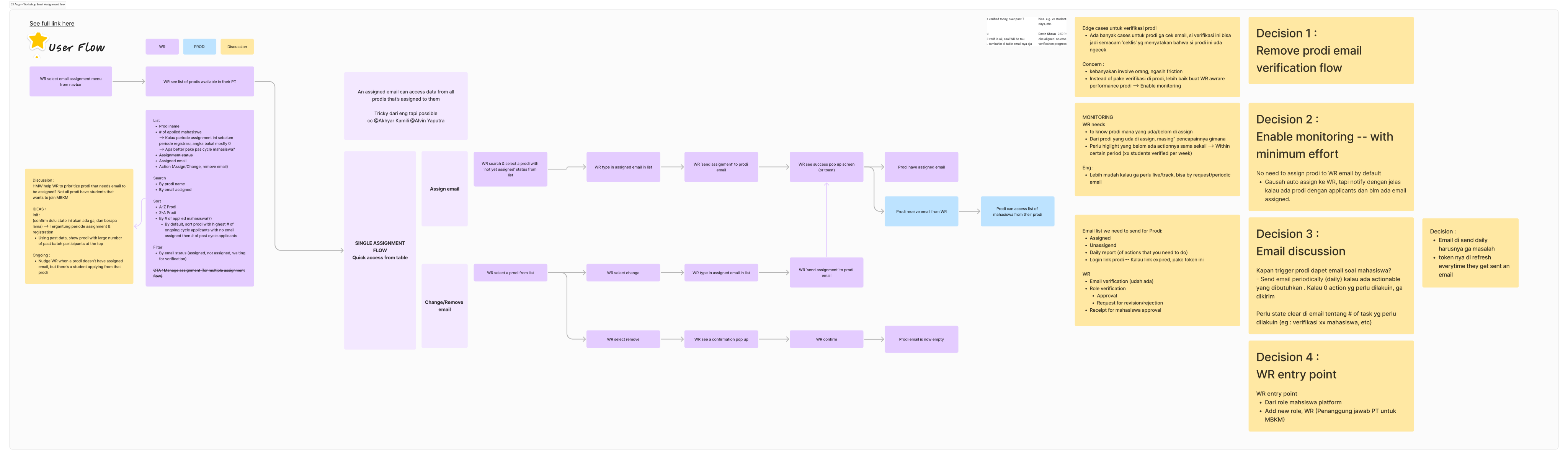

3.4 Before vs. After Visualization
- Before: Physical paper forms physically moving from desk to desk, no centralized tracking, frequent missing pages.
- After: A digital dashboard consolidating all requests, with progress updates, digital signatures, and zero paper clutter.

3.5 User Testing & Iteration
- Beta Launches: We rolled out pilot versions at select faculties. Admin staff tested the system’s real-time notifications and approval processes.
- Feedback & Refinement: Iterations addressed confusion around digital signatures, improved the sorting/filtering of requests, and added a robust search function for older documents.
4. Results & Impact Metrics
Primary Metric: 85% Faster Document Verification
Once administrators adopted the new digital system, document approvals (including SR, SPTJM, and supporting forms) were processed in days instead of weeks. Real-time tracking meant fewer lost documents and more transparency.
Secondary Metrics
- 40% Drop in Admin Workload
- Why It Matters: Automated reminders and structured workflows freed up time for admins to focus on value-added tasks instead of repetitive chase-ups.
- Significant Reduction in Paper Usage
- Why It Matters: Not only cost savings on printing, but also an eco-friendly solution that supports sustainability initiatives.
- Enhanced Accountability
- Why It Matters: Digital timestamps, clear audit trails, and role-based permissions minimized confusion over who approved what and when. Fraud or data tampering risks also decreased.
“We’re finally in control of our workflows. No more stacks of paper gathering dust, and we have instant visibility on pending approvals. It’s a huge leap forward.”
— [Insert Admin’s Name], Administrative Coordinator, Student Affairs Office
5. Key Learnings & Next Steps
5.1 What We Learned
- Early Stakeholder Buy-In: Involving key admin staff from the beginning ensures the final solution aligns with daily realities.
- Transparent Workflows: Visual dashboards and automated notifications reduce miscommunication, encouraging trust and smooth operations.
- User Training & Change Management: Digital transformations require both intuitive interfaces and thorough onboarding to build confidence in new systems.
5.2 Future Plans
- Advanced Reporting & Analytics: Providing robust reports on request volumes, approval times, and user activity to further optimize campus resources.
- Scaling Beyond SR/SPTJM: Expanding the solution to include more administrative processes (e.g., transcript verification, budget requests) to create a comprehensive digital ecosystem.
- Integration With National Databases: Linking with external government platforms or third-party services to streamline compliance checks and funding authorizations.
Additional work


Ready for the next step?
Let’s bring your project to life